



How to Find Your T-Shirt Size Online for a Better Fit
Height and weight can point you toward a T-shirt size, but they can’t determine the fit on their own. To find your T-shirt size online, use them as a starting estimate, then compare your measurements with the size chart for the specific shirt. Fit depends on more than the letter on a label.
Ordering a shirt without trying it on can feel like guesswork. A familiar size may fit differently across brands, and a tee that looks great on one person may sit differently on another. A few careful measurements can make the choice much clearer.
Learn how to measure your chest and sleeve length, use height and body shape to refine your estimate, and compare garment measurements with a shirt you already love. You’ll also see how to account for possible cotton shrinkage and why the same size label doesn’t always mean the same fit. These steps can help you choose matching or personalized tees for a couple’s anniversary, cruise, or milestone celebration with more confidence, and feel ready for keepsake photos.
Key Takeaways
- Use height and weight as a starting estimate, then refine your choice with body and shirt measurements.
- Compare each brand’s size chart with a T-shirt that already fits you well.
- Measure sleeve length and chest width carefully to narrow down the best-fitting option.
- Consider fabric and care instructions when allowing for possible shrinkage.
- Check how the shirt’s cut and length work with your height and shape before choosing matching tees for a celebration.
Allowing for possible fabric shrinkage
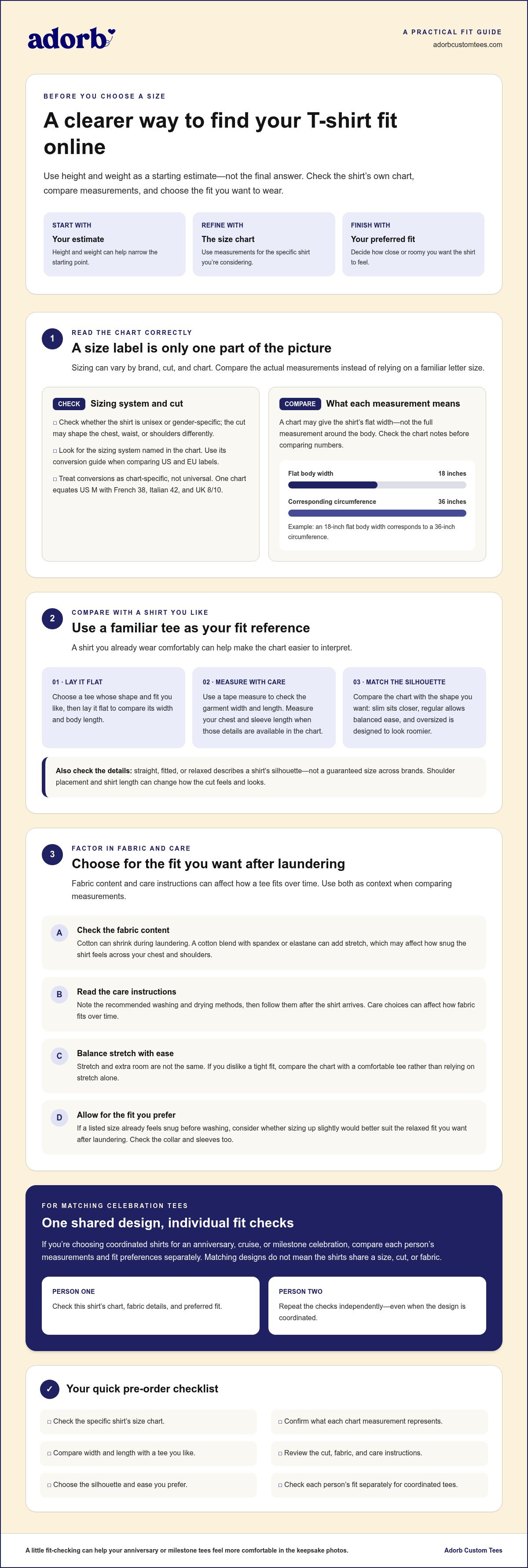
Before choosing a size, consider how the fabric may respond to laundering. Cotton can shrink, while a cotton blend with spandex or elastane can add stretch. Use the care instructions and garment measurements to decide whether your preferred fit needs a little extra room.
- Check the fabric content. Look at the product details for cotton, spandex, or elastane. Cotton may shrink during laundering, so consider sizing up slightly if you want a relaxed fit after washing. A cotton blend with spandex or elastane adds stretch, which can affect how snug the shirt feels across your chest and shoulders.
- Read the care instructions before ordering. Note the recommended washing and drying methods, then follow them after the shirt arrives. Care choices can affect how fabric fits over time. For a custom tee you plan to wear for an anniversary or milestone, consider its care needs alongside its printed design.
- Compare garment measurements, not just the size label. If the chart lists shirt width and length, compare those measurements with a tee you own. Lay your reference shirt flat and use a tape measure to check its width and body length. Compare the results with the chart, allowing a little extra room if you’re concerned about cotton shrinkage.
- Choose the fit you want after laundering. Decide whether you prefer a close-fitting shape or more room through the body. If a listed size already feels snug before washing, sizing up slightly may help account for possible cotton shrinkage. Check the collar and sleeves too. A comfortable body measurement won’t help if those areas feel too tight.
- Weigh stretch against ease. A cotton-and-elastane blend can stretch as you move, but stretch and room aren’t the same thing. If you dislike a tight fit, don’t rely on stretch alone to create extra space. Compare the chart with a comfortable shirt, paying attention to the chest, shoulders, and torso rather than choosing by fabric content alone.
- Consider each person’s preferences. When ordering matching shirts, compare each person’s measurements and preferred fit separately. One person may want a close-fitting tee, while the other prefers more room. Use each shirt’s chart and fabric details to guide your choices, so the shared design feels comfortable on both people after laundering.
Why online T-shirt sizing varies by brand
Use the size chart for each shirt instead of assuming the same label fits across brands. Cut, sizing systems, and chart measurements can all affect how clothing fits.
-
Identify Unisex or Gender-Specific Sizing
Check whether the listing describes the shirt as unisex or gender-specific before choosing a size. A unisex cut is designed for a shared sizing range, while gender-specific cuts may shape the chest, waist, or shoulders differently. Don’t assume your usual letter size will fit the same in both cuts. Compare the listed garment measurements with a shirt whose shape you like.
-
Compare US and EU Sizing
Look for the sizing system named in the chart, then use its conversion guide if you’re comparing US and European labels. Letter sizes do not convert perfectly across every chart. One international chart equates US M with French 38 and Italian 42; it also lists UK 8/10. Treat those as chart-specific equivalents, not universal promises, and compare measurements in inches when available.
- Read what each number measures. A chart may show the shirt’s width while it lies flat, rather than the full measurement around the body. For example, an 18-inch flat body width corresponds to a 36-inch circumference. Check the chart’s measurement notes before comparing figures, or you may mistake a garment measurement for a body measurement.
- Compare the actual cut and silhouette. Look for words such as straight, fitted, or relaxed in the product description. These describe the shirt’s shape, not a guaranteed size across brands. A straight-cut tee may hang differently through the waist than a fitted one, even if both have the same letter label. Match the chart to the silhouette you want.
- Use fabric details as context. Compare the cotton content and other listed materials when evaluating two shirts. Different fabrics can drape or stretch differently, affecting how the same measurements feel on your body. If you’re choosing coordinated tees as a couple, check each shirt’s size chart separately. Matching designs don’t mean the garments share a size or cut.
- Compare each brand separately. For each option, note the size label, chart measurements, cut, and fabric. Then compare those details with a shirt you already wear comfortably. If one brand lists measurements in inches and another uses a different unit, convert the figures before comparing. Focus on fit, not just familiar labels.
Choosing a shirt for your height and shape
Slim styles sit closer to the body, regular styles allow balanced ease, and oversized styles add intentional room. Compare the shirt’s shape and length with how you want it to fit.
- Start with your preferred silhouette. Decide whether you want a close, balanced, or roomy look before choosing a size. A slim shirt follows the body more closely, while a regular cut leaves more ease. An oversized style is designed to look relaxed, not simply to fit like a larger regular shirt. Keep the intended silhouette in mind as you compare sizes.
- Check shoulder placement. Look at where the shoulder seam sits on a shirt that fits you well. A seam near your natural shoulder creates a more defined outline; a dropped seam looks looser. An athletic fit typically has extra room through the chest and shoulders, with a taper toward the waist. Compare the cut description with your preferred shoulder shape.
- Consider your height when checking shirt length. Check the chart’s body-length measurement, then compare it with a tee you already wear. Think about where you want the hem to land, such as near the top of your bottoms or lower over the hips. If you’re choosing between two cuts, compare their lengths rather than assuming the same size label provides the same coverage.
- Match the torso shape to your comfort. Consider how the shirt should fall across your chest, waist, and hips. If you prefer a relaxed drape, choose a cut with ease through the torso. If you want a closer outline, a slim cut may suit you. For coordinated couple’s shirts, each person can choose a different silhouette while sharing the same design.
- Use a try-on to assess the full fit. When you can try on the shirt, check the shoulder seams, torso, and hem together. Raise your arms and move naturally to see whether the fabric pulls or feels too loose. Notice whether the hem stays where you want it and the sleeves sit comfortably. A different cut may improve the overall shape without changing your preferred size.
- Account for stretch without choosing by feel alone. Stretchy fabric may move comfortably across the chest, but the shirt’s length and shoulder fit still matter. Compare how the fabric behaves with the cut shown in the chart. For example, a relaxed tee with stretch can feel different from a fitted tee in the same labeled size. Judge the whole shape, not stretch alone.
Using height and weight to estimate shirt size
Use height and weight to narrow your options, not to replace a size chart. These figures can suggest a starting point, while your proportions and preferred fit help refine the choice.
- Start with the chart’s height-and-weight guide. If a size calculator asks for your height and weight, enter both to get a starting suggestion. One calculator may suggest a size from S to 5XL. Treat the result as a shortlist, then compare its recommendation with the shirt’s cut and garment measurements before deciding.
- Let height guide your length check. A taller person may prefer more body length, while someone shorter may want a hem that doesn’t overwhelm their frame. Compare the chart’s shirt-length measurement across options. If two sizes differ in length, consider where each hem would fall over your bottoms, not just which size seems to match your weight.
- Use weight as context, not as a substitute for body shape. The same weight can sit differently on two people, so it doesn’t reveal shoulder width, chest shape, or torso proportions by itself. If an estimate suggests a size, use it as your first candidate. Then compare the product’s cut and measurements with a shirt that fits the way you like.
- Check your shoulder and sleeve proportions. Compare the shoulder seam with one on a shirt you wear comfortably. To assess sleeve length, measure from the shoulder seam to the sleeve opening on that shirt. A height-and-weight estimate may not account for longer arms or broader shoulders, so use those details to refine your size or style choice.
- Refine your estimate with a tape measure. Stand naturally and wrap the tape around your body where the garment needs room. Keep it level without pulling it tight. Compare your measurement with the type of measurement shown on the chart. If it lists garment dimensions, compare those figures with a well-fitting shirt instead of treating them as body measurements.
- Choose the fit you want to wear. If you prefer a relaxed shirt, compare the next size’s width and length before settling on the first suggestion. For a closer fit, consider whether the recommended size follows your shape without restricting movement. To find your t-shirt size online, combine the estimate with your measurements and fit preference. For matching shirts, assess each person separately.
Height and weight can narrow the choices, but they don’t capture every proportion. Use them to create a starting shortlist, then compare the chart with your measurements and preferred silhouette. This makes it easier to choose a size for your shape, whether you want a relaxed fit or a closer outline. If you’re ordering coordinated shirts as a couple, repeat the process for each person. Finding your t-shirt size online means weighing the estimate alongside the details that affect how the shirt sits.
How to measure chest width for a T-shirt size
- Measure around your chest. Stand straight and place a flexible tape measure around the fullest part of your chest, just beneath your armpits. Keep the tape level across your back and front as it circles your body. This is your body circumference, not the width of a T-shirt laid flat. Record the result in inches to compare it with a U.S. size chart.
- Keep your body relaxed. Let your arms rest naturally as you measure, and breathe normally. Don’t pull the tape tight or leave a large gap. A strained stance can change the reading and lead you to a shirt that feels restrictive across your chest. If someone can help, ask them to check that the tape stays level at the back.
- Identify what the size chart measures. A chart may show body circumference or garment width. Look for labels, diagrams, or notes that explain the measurement. These figures aren’t interchangeable. If the chart lists a flat width, compare it with a flat shirt measurement rather than matching it directly to the tape measurement around your body.
- Convert flat width to an approximate circumference. Double the flat chest width to estimate the shirt’s circumference. For example, a shirt measuring 22 inches across when laid flat has an approximate chest circumference of 44 inches. This calculation helps you interpret garment dimensions, but it doesn’t tell you how much ease you’ll prefer. Consider the fit of your reference shirt as well.
- Measure a shirt that fits comfortably. Lay it flat and smooth the fabric without stretching it. Measure from one side seam to the other, just below the armpits. For example, an 18-inch flat width corresponds to a 36-inch circumference. Keep this result separate from your body measurement so you can compare garment-to-garment and body-to-body accurately.
- Compare the measurements with your preferred fit. A shirt’s circumference may be larger than your chest measurement to allow room. Compare the chart with your reference tee and consider whether you want a closer or looser feel. A chart figure that matches the shirt you like can be more useful than choosing by a familiar letter size alone.
- Repeat the measurement if the tape shifts. Check that it stays horizontal and passes beneath both armpits, then take another measurement while standing naturally. If the readings differ, reposition the tape and measure again. Use a consistent method for each person when comparing sizes for a pair, but choose each person’s size separately.
Adorb Custom Tees: Bachelorette Shirts
Adorb Custom Tees offers Bachelorette Shirts for a celebratory group look, from getting-ready moments to keepsake photos. After using measurements and the shirt’s size chart to choose a fit, compare sizes for each person rather than ordering everyone the same size. The group can share a design while choosing individual fits that feel comfortable.
For a bachelorette celebration, matching shirts can bring the group together in photos and help mark a memorable occasion. Browse the bachelorette party shirts and choose the look that suits your celebration.
Visit adorbcustomtees.com to explore shirts for your special occasion.
Make Your Next Celebration Feel Like Yours
Knowing how to find your t-shirt size online helps you choose shirts you’ll feel good wearing beyond the big day. Now think about what you want those shirts to celebrate: a favorite date, a shared joke, or a joyful reminder captured in photos. For couples, a coordinated look can make an anniversary or milestone feel more personal, while each person chooses a comfortable fit.
Adorb Custom Tees offers Bachelorette Shirts, Custom Anniversary shirts, and couple shirts for celebrations worth remembering. Choose a design that reflects your occasion, then use your sizing notes to make a thoughtful choice for yourself or both of you.
Your next celebration deserves a look that feels unmistakably yours. Make it a moment you’ll love remembering.
Frequently Asked Questions
How to Choose the Best Fit T-Shirt Size: What Shirt Size Am I?
Start with the size chart for the exact shirt, then compare it with your measurements and preferred fit. Height and weight can narrow the options, but body proportions affect how a shirt sits. For example, broader shoulders may make a size feel snug even if the chart’s general estimate seems right. If you’re choosing shirts for two people, use each person’s measurements and fit preferences separately.
How To Tell If My T-Shirt is Too Small?
A T-shirt may be too small if it pulls across your chest, restricts arm movement, or has shoulder seams that sit noticeably inward. Check the hem too: if it rides up when you lift your arms, the torso may be too short or tight. Try sitting, reaching, and moving naturally. A comfortable shirt should let you do those things without constant tugging or strained fabric.
Is width the same as chest circumference?
No. Width usually describes a flat garment measurement from one side to the other, while chest circumference goes around the body or shirt. For example, a flat width of 22 inches corresponds to an approximate circumference of 44 inches. Check the chart’s labels before comparing numbers. If the listing uses “chest” without explaining the measurement, use its diagram or measurement notes to identify what the figure represents.
How to choose between sizes if measurements fall between sizes
Compare both sizes’ garment measurements with a T-shirt that fits you well, and consider the cut and fit you prefer. If cotton shrinkage concerns you or you want a relaxed fit, sizing up slightly may help.
How to measure body length for a T-shirt size
Lay a T-shirt that fits you well flat and use a tape measure to check its body length. Compare that measurement with the specific shirt’s size chart, and consider where you want the hem to land.
How do men's and women's T-shirt size charts differ
The charts can list different measurements for the same letter size. For example, the men’s chart lists an M chest width of 20 inches, while the women’s lists 19 inches; their XL shirt lengths are 31 inches and 28.25 inches, respectively.

