Screen Printing in Fort Lauderdale
The right choice for 25+ pieces of the same design on crew-neck tees — marine crew shirts, team uniforms, restaurant staff shirts. Most cost-effective method at volume.


📍 Fort Lauderdale, Florida
Stitched logos for Fort Lauderdale yacht crews, marine trades, and Las Olas storefronts — permanent, professional, and available with no minimum order.
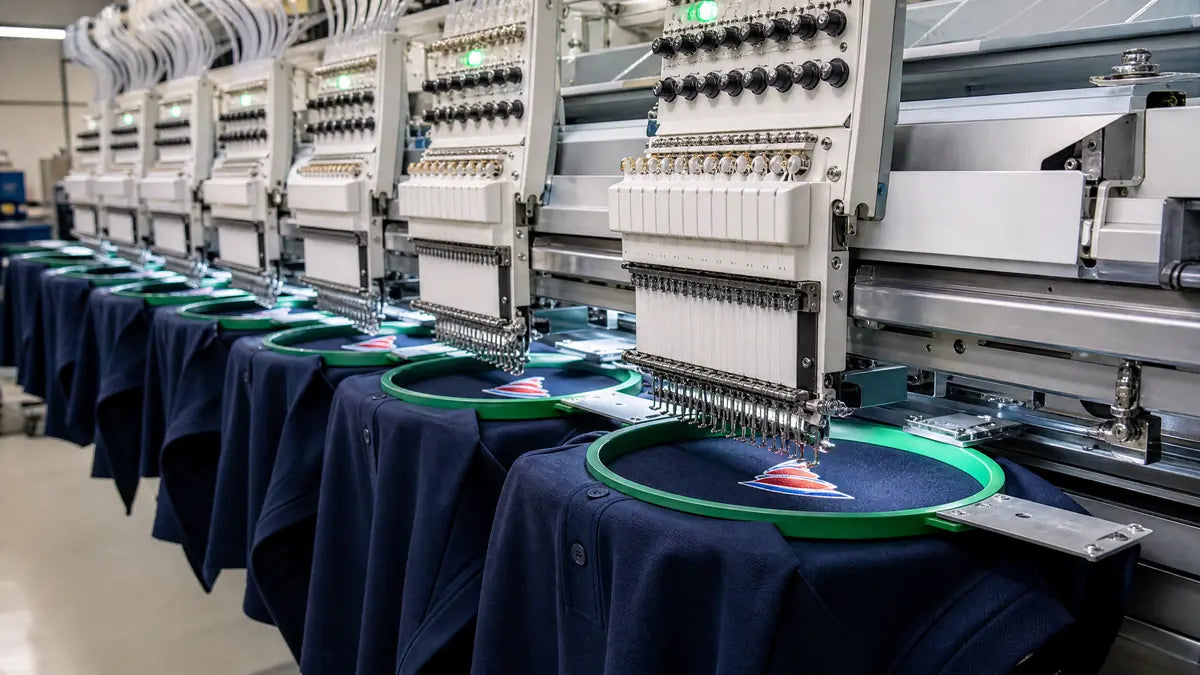
Embroidery is what Fort Lauderdale's marine, hospitality, and corporate accounts reach for when the garment is a polo, a jacket, or a structured cap — and the logo needs to look premium, not printed. Yacht-crew polos for the companies around Port Everglades, front-desk and concierge uniforms for the beachfront hotels on A1A, and corporate polos for the financial and legal firms along Las Olas Boulevard are all standard embroidery accounts for us.
Our shop is at 389 NE 2nd Ave in Hallandale Beach — a 15–20 minute drive south of Downtown Fort Lauderdale on I-95 or Federal Highway. We run daily delivery routes into Fort Lauderdale on orders above 50 pieces, and free pickup at the shop is always available. For Fort Lauderdale customers who need embroidered uniforms, polos, or caps, we handle the full order from artwork to finished garment — no third-party embroidery shop required.
The design is converted to a stitch file first, and then sewn into the fabric with thread — no ink involved, which is why an embroidered mark holds up to salt, sun, and repeated washing. Our Custom Embroidery hub explains the whole process.

Ready for Custom Embroidery in Fort Lauderdale?
Fast turnaround, competitive pricing, and free, no-obligation quotes.
Request a QuoteFort Lauderdale's embroidery volume is concentrated in three categories: the marine and yacht industry around Port Everglades, the hospitality and hotel corridor along A1A and Las Olas, and the corporate and professional services firms in the downtown and financial district. Here is what those orders actually look like.
The marine trades around Port Everglades and the 17th Street Causeway marinas — yacht-service companies, boat detailers, riggers, marine electronics shops, provisioning crews, and the companies that keep the marinas running — order embroidered polos for their customer-facing staff. A typical marine account runs 24–100 polos per order: moisture-wicking or cotton polos with the company logo embroidered on the left chest, sometimes with a vessel name or role on the right chest.
Fort Lauderdale International Boat Show exhibitors order embroidered polos for their booth and dock staff in the weeks before the show. We keep artwork and digitized files on file for annual reorders and typically turn repeats in 3–5 business days. Delivery to the marina, show floor, or office, or free pickup at the shop.
The beachfront hotel corridor along Fort Lauderdale's A1A — the Marriott Harbor Beach, the Pelican Grand, the W Fort Lauderdale, and the boutique properties along the strip — orders embroidered polos and jackets for front-desk, concierge, valet, and management staff. Hospitality uniforms typically run 50–200 pieces per season, with the hotel logo on the left chest and sometimes a department or role designation on the right.
Restaurant and bar accounts along Las Olas Boulevard order embroidered polos for management and front-of-house staff — the premium look that distinguishes managers from hourly staff in a customer-facing environment. We handle the full order from artwork to finished garment, including garment sourcing in the right styles and colors.

The financial, legal, and professional services firms along Las Olas Boulevard and in the downtown Fort Lauderdale financial district order embroidered polos for corporate events, client-facing staff, and branded merchandise. Corporate polo orders typically run 24–100 pieces per order, with the company logo on the left chest and sometimes a tagline or event name on the right. We handle the full order from artwork to finished garment, including garment sourcing in the right styles and colors.
Crew polos, performance shirts, caps, softshell and rain jackets, duffels, and towels all take stitching well. Browse the embroidery hub for the full range of embroiderable items.

PRICING & TURNAROUND
Because the machine is paid by the stitch, a tight left-chest logo runs well under a dense back design. Digitizing a new logo is a one-time $30 to $75, waived on every reorder afterward. The Custom Embroidery hub has the detailed pricing, or send artwork and we'll quote it the same day.
Ready to Get Started?
Request your free quote — most orders ready in 3–7 business days.
Get a Free QuoteOrdering is three steps: artwork in, digitized proof approved, stitching done in-house at our Hallandale Beach shop — generally 7 to 10 business days from approval. The embroidery hub spells out each step.
The right choice for 25+ pieces of the same design on crew-neck tees — marine crew shirts, team uniforms, restaurant staff shirts. Most cost-effective method at volume.
Single-piece and small orders (1–20 pieces) on 100% cotton light garments with photographic or full-color designs. No setup fee, softest hand-feel.
Mixed-garment orders (shirts + hoodies + hats in one order), any fabric type, and 5–40 piece runs. Also handles complex artwork that embroidery can't reproduce in thread.
Not sure which method fits your order? Contact us with your artwork and quantity and we'll recommend the right one.
Our Hallandale Beach shop serves embroidery customers across Broward and Miami-Dade County, about 15–20 minutes south of Fort Lauderdale.
See the full list of areas we serve across South Florida on our areas we serve page.
Get Your Custom Embroidery Quote
Fast turnaround, competitive pricing, free local delivery in Fort Lauderdale.
Request a QuoteTell us about your order and we will get back to you within 1 business day.
Regularly. With roughly 100 marinas and boatyards in the city, crew polos, caps, and jackets carrying a vessel name are a core part of our embroidery work, and thread handles sun and salt spray far better than a printed mark. We keep the stitch file so a mid-season crew change or a rush ahead of the fall boat show is just a sizes-and-counts conversation.
Yes — restaurants, galleries, boutiques, and small hotels along Las Olas are a steady account type for us. Most settle on an embroidered polo or apron plus a cap, and we schedule reorders around their hiring rather than making them guess quantities up front. Digitizing happens once; every batch after that reuses the same file.
Our shop
389 NE 2nd Ave, Hallandale Beach, FL 33009
Pickup and drop-off at the shop, right on the Miami-Dade and Broward line.
Call, WhatsApp, or fill out the quote form. We will handle the rest — artwork, printing, and local pickup.

About Us
At Adorb Custom Tees, we make comfortable and personalized clothing and gifts for every occasion.