Serigrafía en Fort Lauderdale, explicada
La serigrafía es el método clásico para 25 piezas o más de un mismo diseño. No hacemos serigrafía; esos pedidos los estampamos con DTF.


📍 Fort Lauderdale, Florida
Qué es el DTG, cuándo conviene y cómo estampamos tu pedido de Fort Lauderdale en nuestro taller con DTF, UV DTF o bordado. Adorb no trabaja con DTG. Recogida local, la mayoría de los pedidos listos en 1 a 10 días según el tamaño del pedido.
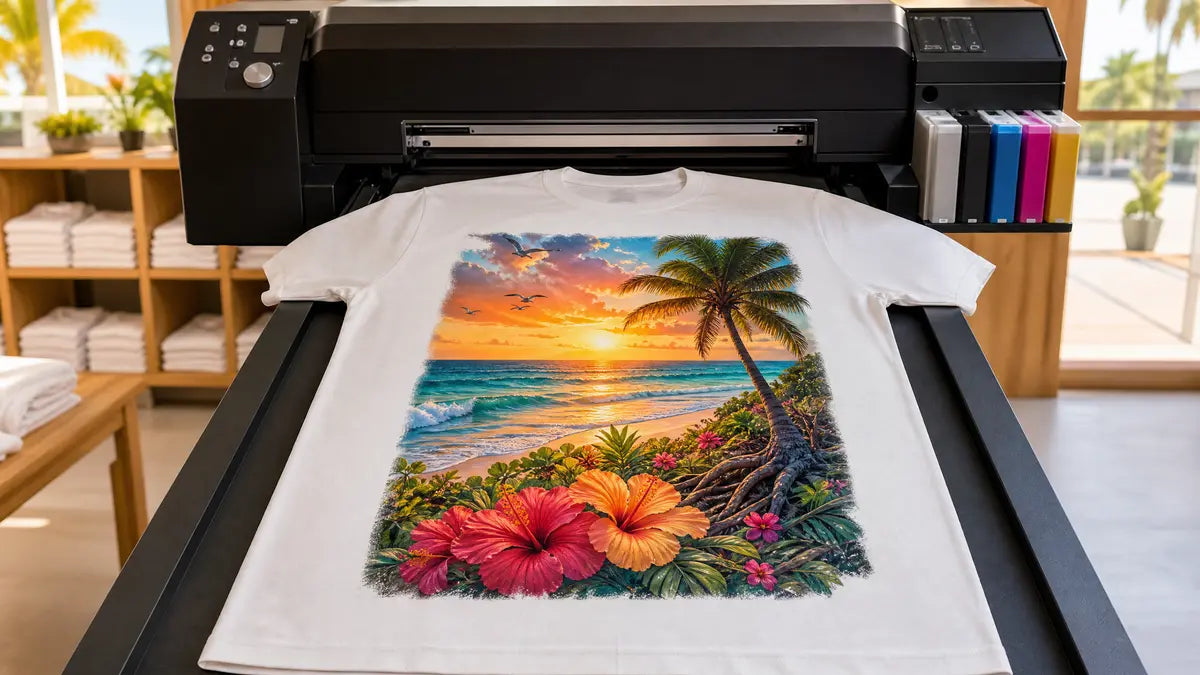
El DTG es el método que muchos clientes de Fort Lauderdale tienen en mente cuando el pedido es pequeño, a todo color o personalizado: una sola camiseta conmemorativa, un lote de 10 camisetas personalizadas para la inauguración de un restaurante, o una camiseta con foto para la fiesta de jubilación de un miembro de la tripulación. Adorb no trabaja con DTG. Esos mismos pedidos los estampamos con transferencias DTF, sin mallas que preparar y sin límite de colores.
Nuestro taller está en el 389 NE 2nd Ave en Hallandale Beach, a unos 15 o 20 minutos en carro al sur del centro de Fort Lauderdale por la I-95 o Federal Highway. La mayoría de los pedidos están listos en 1 a 10 días, según el tamaño del pedido; los pedidos pequeños suelen estar en el extremo corto de ese plazo. La recogida gratuita en el taller siempre está disponible, y los pedidos más grandes se pueden entregar en Fort Lauderdale.
Sin mallas ni plantillas: el DTG estampa un archivo directamente sobre la prenda con un cabezal tipo inyección de tinta, y eso es lo que hace prácticos los pedidos cortos a todo color. El proceso completo está en la guía de DTG.

Listo para estampar tu pedido de Fort Lauderdale?
Entrega rápida, precios competitivos y cotizaciones gratis y sin compromiso.
Quiero mi estampadoEn Fort Lauderdale, los pedidos pequeños a todo color suelen venir de tres lugares: la industria marina alrededor de Port Everglades y el 17th Street Causeway, el corredor de eventos y hospitalidad a lo largo de Las Olas y la A1A, y los hoteles de la playa, donde surgen piezas sueltas para el personal y regalos VIP. Así son esos pedidos, y así los estampamos con DTF.
Los oficios marinos alrededor de Port Everglades y de las marinas del 17th Street Causeway necesitan con regularidad piezas sueltas o pedidos pequeños: una camiseta personalizada para la despedida de un miembro de la tripulación, una camiseta personalizada para el dueño de una embarcación, o unas cuantas camisetas de evento para la botadura de un barco. Una transferencia DTF resuelve esto sin la preparación de mallas que haría poco rentable un pedido de 5 piezas.
Los expositores del Fort Lauderdale International Boat Show también necesitan piezas personalizadas: una sola camiseta para un cliente VIP, una camiseta personalizada para un representante de la empresa, o un pequeño lote de camisetas con la marca para un evento privado en la marina. Dinos la fecha de la feria desde el principio y planificamos el pedido en torno a ella.
Los restaurantes y bares a lo largo de Las Olas Boulevard y la franja frente a la playa en la A1A necesitan con regularidad pedidos pequeños de camisetas personalizadas para eventos, inauguraciones y promociones de temporada, el tipo de pedido en que cada camiseta puede llevar un nombre o un número distinto, o en que el diseño es a todo color. Las estampamos con DTF, sin la preparación de mallas que haría poco rentable un pedido de 10 piezas.
Para organizadores de eventos que se encargan de eventos corporativos, galas benéficas o fiestas privadas en los hoteles de la playa, estampamos camisetas DTF personalizadas para cada asistente, con un nombre en la espalda y el diseño del evento al frente, sin cargo de preparación por camiseta y sin mínimo.

Los hoteles frente a la playa a lo largo de la A1A de Fort Lauderdale a veces necesitan una o dos camisetas personalizadas para un huésped específico, una bienvenida VIP o un evento único. Los pedidos pequeños como estos suelen estar en el extremo corto de nuestro rango de 1 a 10 días; llama con anticipación con la fecha y te diremos con claridad qué es realista.
Para pedidos repetidos más grandes y programados, como renovaciones de uniformes o ropa de eventos para todo un turno, seguimos estampando con DTF o pasamos los polos y las gorras a bordado, que también hacemos en nuestro propio taller.
Si es de algodón o rico en algodón, el DTG lo estampa: camisetas, camisetas sin mangas, sudaderas con capucha, delantales y bolsas de lona funcionan bien, y los colores claros se ven más nítidos. El DTF estampa todo eso y suma poliéster y telas de alto rendimiento.

TIEMPOS DE ENTREGA Y PRECIOS
Nuestro estampado DTF tiene precio por pieza, sin preparación de mallas, así que una sola camiseta no se penaliza frente a un lote. Envía un archivo y lo cotizamos el mismo día.
Listo para empezar?
Pide tu cotización gratis — la mayoría de los pedidos están listos en 1–10 días, según el tamaño del pedido.
Quiero mi estampadoTres pasos: envía el diseño, aprueba la prueba y recoge las camisetas terminadas, estampadas con DTF en nuestro propio taller de Hallandale Beach, todo derecho por la I-95.
La serigrafía es el método clásico para 25 piezas o más de un mismo diseño. No hacemos serigrafía; esos pedidos los estampamos con DTF.
Atiende pedidos de prendas mixtas (camisetas, sudaderas con capucha y gorras en un mismo pedido), cualquier tipo de tela y cualquier cantidad, sin mallas que preparar. Así estampamos las camisetas a todo color en nuestro propio taller.
Es lo que suelen necesitar los polos de tripulaciones de yates, los uniformes de hospitalidad, las chaquetas y las gorras estructuradas — un logo bordado que dura más que los métodos de estampado.
No sabes qué método le conviene a tu pedido? Contáctanos con tu arte y la cantidad y te recomendamos el método indicado.
Nuestro taller de Hallandale Beach estampa DTF y UV DTF y borda para clientes de los condados de Broward y Miami-Dade, a unos 15 o 20 minutos al sur de Fort Lauderdale.
Mira la lista completa de las áreas que atendemos en el sur de Florida en la página de áreas que atendemos.
Cotiza tu impresión personalizada
Entrega rápida, precios competitivos, entrega local gratis en Fort Lauderdale.
Cotiza tu impresiónCuéntanos sobre tu pedido y te responderemos dentro de 1 día hábil.
Sí. Los pedidos de tripulación suelen ser de seis a doce camisetas con el nombre de la embarcación, y los estampamos con DTF sin cargo de montaje. Los expositores del Fort Lauderdale International Boat Show también piden camisetas de stand y piezas para regalar; dinos la fecha de la feria y planeamos el pedido alrededor de ella.
Sí. Una fotografía se estampa a todo color con DTF sin cargo de montaje, y cada camiseta puede llevar un nombre o una fecha distinta sin costo extra. La mayoría de los pedidos está lista en 1 a 10 días según el tamaño; llámanos con la fecha del servicio y te decimos claramente qué es realista, y se pueden agregar piezas después.
Nuestro taller
389 NE 2nd Ave, Hallandale Beach, FL 33009
Recogida y entrega de pedidos en el taller, justo sobre la línea entre Miami-Dade y Broward.
Llama, escríbenos por WhatsApp, o llena el formulario. Nosotros nos encargamos del resto — diseño, impresión y recogida local.

About Us
At Adorb Custom Tees, we make comfortable and personalized clothing and gifts for every occasion.